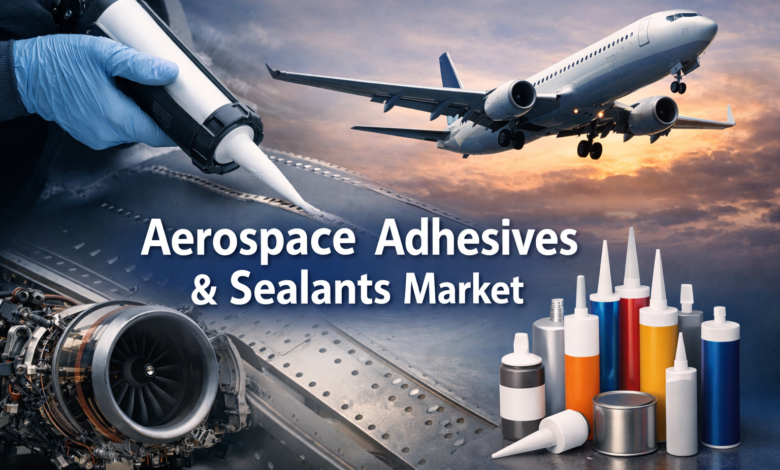
The aerospace sector operates under some of the most demanding performance and safety requirements of any industry, requiring materials that deliver reliability across long operational lifecycles. Adhesives and sealants have become essential in aerospace engineering due to their ability to enhance structural integrity, improve fatigue resistance, and ensure airtight and fluid-resistant assemblies. By enabling strong bonding and effective sealing without adding unnecessary weight, these materials support aircraft designs that prioritize safety, durability, and operational efficiency in both civil and defense aviation.
The Aerospace Adhesives & Sealants Market was valued at USD 1.1 billion in 2023 and is projected to reach USD 1.7 billion by 2032, expanding at a CAGR of 5.1% during the forecast period from 2024 to 2032. Market growth is driven by increasing aircraft production, rising maintenance and overhaul activities, and the growing use of advanced materials in modern airframes. Aerospace adhesives and sealants are widely used to bond, seal, insulate, and protect critical components, helping manufacturers and operators meet strict regulatory standards while improving performance across commercial, military, and space platforms.
One of the key factors driving the Aerospace Adhesives & Sealants Market is the growing emphasis on lightweight aircraft design. Aircraft manufacturers are increasingly adopting composite materials and advanced alloys to improve fuel efficiency and reduce emissions. Adhesives offer superior bonding strength for these materials while distributing stress evenly across bonded surfaces. This eliminates the need for excessive mechanical fasteners, which add weight and create stress points. Sealants further enhance performance by protecting bonded joints from moisture, chemicals, and thermal expansion, making them essential in modern aircraft structures.
The steady expansion of global commercial aviation is another major contributor to market growth. Rising air passenger traffic has led airlines to increase fleet sizes and invest in next-generation aircraft that offer improved fuel efficiency and lower operating costs. As aircraft production rates increase, so does the demand for aerospace-grade adhesives and sealants used in structural bonding, interior assembly, and system integration. In parallel, defense modernization programs and increased procurement of military aircraft and unmanned aerial vehicles are strengthening demand for high-performance bonding and sealing materials.
Technological advancements in material science continue to enhance the capabilities of aerospace adhesives and sealants. Manufacturers are developing formulations with improved heat resistance, faster curing times, and enhanced chemical stability to meet evolving aerospace standards. Additionally, the shift toward low-VOC and environmentally compliant products is gaining momentum as regulatory bodies impose stricter environmental and workplace safety requirements. These innovations are enabling aerospace manufacturers to improve production efficiency while aligning with sustainability goals
Aerospace adhesives and sealants are widely used across aircraft manufacturing applications, including fuselage bonding, wing assembly, and interior component installation. They provide strong, durable bonds for panels, floor structures, and honeycomb assemblies while improving vibration damping and noise reduction. Sealants are applied to seams, fasteners, and joints to maintain pressure integrity and prevent air, fuel, and fluid leaks, ensuring safety and comfort during flight operations.
Fuel tank sealing and corrosion protection represent critical applications where aerospace sealants are indispensable. Specialized sealants are formulated to withstand prolonged exposure to aviation fuels, hydraulic fluids, and extreme temperatures without degradation. Corrosion-inhibiting sealants protect metal structures from moisture and chemical exposure, extending aircraft lifespan and reducing long-term maintenance costs. These benefits are particularly important for aircraft operating in harsh environmental conditions.
The maintenance, repair, and overhaul segment is emerging as a significant source of demand for aerospace adhesives and sealants. As global aircraft fleets continue to age, MRO activities such as structural repairs, component replacement, and resealing operations are becoming more frequent. Adhesives are used for patch repairs and structural reinforcement, while sealants are essential for restoring fuel tanks, joints, and pressurized systems. Growth in MRO services is especially strong in regions with large commercial fleets and expanding aviation infrastructure.
Regionally, North America dominates the Aerospace Adhesives & Sealants Market due to the presence of major aircraft manufacturers, defense contractors, and advanced MRO facilities. Europe follows closely, supported by strong aerospace engineering capabilities and investments in next-generation aircraft programs. The Asia-Pacific region is expected to witness the fastest growth during the forecast period, driven by expanding airline fleets, rising defense spending, and increasing aircraft production across emerging economies.
Looking ahead, the Aerospace Adhesives & Sealants Market is positioned for steady growth as the aerospace industry continues to prioritize efficiency, safety, and sustainability. Continuous innovation in adhesive and sealant technologies, combined with rising aircraft production and maintenance requirements, will further strengthen market demand. As aerospace platforms become more advanced and material-intensive, adhesives and sealants will remain essential to the future of global aviation.