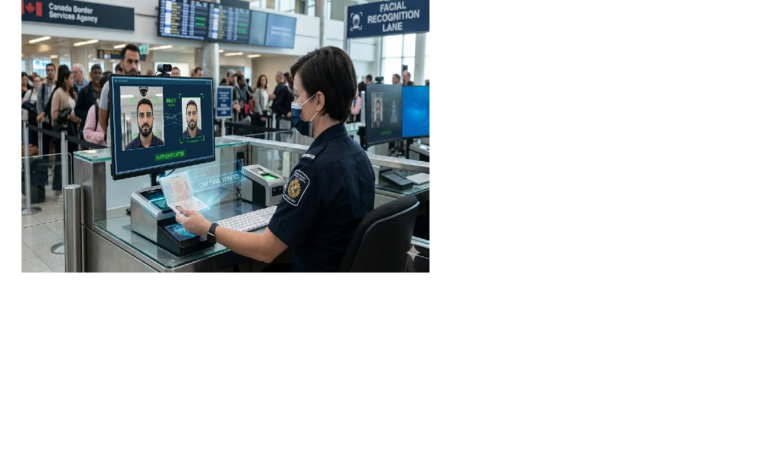
Photograph comparisons can help identify potential applications under different identities, giving passport officials additional leads to assess alongside supporting documents, previous records, and other available information before reaching conclusions about identity or suspected fraud.
WASHINGTON, DC, October 4, 2026 — Facial recognition can help passport officials identify photographs that may depict the same person under different identities, adding a visual lead to a review process that also examines citizenship evidence, identification documents and application information.
The technology’s contribution is narrower than the phrase “identity verification” sometimes suggests, because a possible photographic match does not independently establish a person’s citizenship, explain differences between records or demonstrate that someone knowingly submitted a fraudulent application.
Its value lies in identifying a connection that deserves examination, allowing officials to investigate whether the images concern one person, whether the associated information is accurate, and whether any difference has a legitimate explanation.
For applicants, the distinction matters because a computer-generated similarity is an evidentiary starting point, while the passport decision depends on understanding the person and documents behind the images rather than accepting visual resemblance as a complete answer.
A Photograph Adds Evidence That Written Records Cannot
Names, dates of birth and other identifying details describe a claimed identity, while photographs provide a different kind of information that can help reviewers examine whether separate records appear to concern the same individual.
That difference matters when someone presents different personal details across applications, because written information can create the appearance of separate people while photographs raise the question of whether the records actually describe one person.
The reverse problem also requires attention, since different people can resemble one another, making it necessary to distinguish a useful visual lead from an incorrect association that could unfairly place a legitimate applicant under suspicion.
Photographic evidence therefore contributes to identity assessment without replacing documentary review, with each source addressing questions that the others cannot fully answer about the applicant’s history, citizenship and connection to the records submitted for consideration.
What Published Passport Oversight Has Established
A Government Accountability Office report published in 2014 described State Department use of facial recognition during passport adjudication, documenting its role alongside other checks intended to identify possible false identities and applications requiring additional examination.
In technical comments included with that report, State officials explained that specialists did not deny applications solely on facial recognition results, describing the technology as one tool that could support referral for further review and investigation.
The report examined passport issuances from fiscal years 2009 and 2010, so its description provides historical evidence of the technology’s role rather than establishing the exact systems, operational arrangements or performance of passport screening in September 2026.
That qualification preserves the difference between documenting a longstanding use and claiming current technical knowledge, particularly when public sources do not disclose every detail of how an individual application is evaluated within the department.
Verification and Identification Answer Different Questions
Facial recognition is commonly discussed as though every use involves the same task, but comparing a photograph with one claimed identity differs from searching a collection of images for possible connections to an unknown or disputed identity.
A one-to-one comparison asks whether two images appear to show the same person, while a one-to-many search looks for possible candidates within a larger collection, producing results that must be understood in light of that different purpose.
In a passport-fraud context, the relevant concern may involve whether photographs associated with different identity claims depict one individual, rather than merely whether a traveler standing before a camera resembles the photograph on a presented document.
Those distinctions help prevent misleading descriptions of the technology, because success in a controlled comparison does not automatically establish performance in a broader search or explain how officials should interpret a candidate identified among many records.
A Candidate Is Not a Confirmed Identity
A candidate result indicates that an image merits attention under the system’s comparison process, but it does not independently explain who the person is or why the photograph appears in the record being considered.
The next question is whether the apparent connection survives examination alongside reliable information, including the circumstances of the images and the documents associated with the identities that the system has brought together for review.
A similarity score should therefore not be presented as the probability that someone committed fraud, because visual resemblance and criminal conduct concern different propositions requiring different evidence before either can support a reliable official conclusion.
For the same reason, a highly ranked candidate does not become an established identity merely because it appears ahead of other candidates, since ranking describes a comparison result rather than a complete factual determination about the individual.
The Same Person Can Have Records Under Different Names
Photographs associated with different names can raise a legitimate question without establishing impersonation, because a person may have lawfully changed their name while older records continue to reflect the identity information used before that change.
The evidentiary task is to determine whether the records represent a documented transition or an unsupported attempt to claim another identity, making the explanation and supporting documents important even when the photographs appear to show one person.
Evaluate a genuine name change through the applicable documentation requirements, rather than treating it as inherently suspicious because a visual comparison connects images attached to names that are not identical across the person’s historical records.
Conversely, a photographic connection cannot make an invented explanation accurate, so a claim that different identities belong to one person must still be supported by truthful information and appropriate evidence linking the records in question.
The Meaning of the Match Depends on the Records
If two photographs depict the same person, that finding answers a visual identity question but leaves other issues unresolved, including whether the associated names, citizenship claims and application histories accurately describe that person’s circumstances.
An administrative correction, a lawful change and deliberate impersonation can produce superficially similar differences between records, which is why the explanation cannot be inferred solely from the fact that a system has connected the photographs.
The reviewer must understand what each record represents and how it was created, avoiding the assumption that every repeated face proves deception or that every applicant’s explanation resolves the issue without independent supporting evidence.
A Maine Case Shows How a Photographic Lead Can Matter
In August 2023, The Associated Press reported that Napoleon Gonzalez had been convicted of offenses including passport fraud after using his deceased brother’s identity, with Maine motor-vehicle facial recognition connecting the same face to two identities in 2020.
The reported lead came from Maine’s Bureau of Motor Vehicles, making the case an example of photographic comparison contributing to an investigation involving passport fraud, rather than proof that State Department application screening initiated that particular investigation.
The distinction matters because the agency generating a lead and the offense eventually established are separate facts, and combining them into a single description could misrepresent how authorities first identified the suspected identity misuse.
The broader lesson is that photographs can expose a relationship between records that written information alone may not explain, while the resulting case still depends on investigating that relationship and establishing the relevant underlying conduct.
False Matches Require Serious Attention
A false positive occurs when a comparison incorrectly associates images of different people, creating a potential problem when a reviewer treats the result as established identity evidence without sufficiently examining the supporting circumstances.
A false negative occurs when the system fails to recognize images of the same person, reflecting a different limitation because the absence of a suggested connection does not independently establish that every identity claim in an application is accurate.
Both concepts matter when assessing the technology, but their practical consequences differ, so a single generalized statement about “accuracy” cannot explain what a particular system does well or what errors may require additional safeguards.
A useful public account should therefore identify the task and evidence being discussed, avoiding unsupported claims that facial recognition either determines identity perfectly or provides no meaningful assistance in reviewing potentially fraudulent applications.
Research Findings Must Be Applied Carefully
The National Institute of Standards and Technology has documented differences in facial recognition performance across algorithms and demographic groups, demonstrating why broad claims about the technology should account for variation rather than assume every system behaves identically.
Those research findings do not, by themselves, establish the error rate of the State Department’s current passport process, because a deployed program involves particular software, images, procedures, and review arrangements that require their own evidence.
The practical implication is that testing and evaluation matter, especially when a mistaken association could affect someone’s access to a government document, while claims about performance should remain tied to the system and conditions actually examined.
Human review also needs discipline and reliable supporting evidence, because a person’s presence in the process does not automatically eliminate the possibility of accepting an incorrect suggestion or overlooking information that contradicts it.
Photograph Quality Matters Without Determining Eligibility
Passport photographs serve an evidentiary purpose, and State Department guidance calls for a recent color image that follows published appearance and presentation requirements, including restrictions on filters and digital alterations that change the submitted photograph.
Those instructions help applicants provide an appropriate image, but accepting a photograph does not establish citizenship or guarantee that the entire application satisfies the separate requirements for issuing a United States passport.
Likewise, a request to replace an unacceptable photograph should not automatically be treated as a fraud investigation, because the immediate issue may simply be whether the image meets the department’s ordinary submission requirements for processing.
Applicants should follow the official photo guidance and preserve an accurate representation of their appearance, rather than edit an image for attractiveness or assume that a professionally styled photograph is necessarily suitable for a passport application.
A Clear Image Still Requires Context
A photograph can be technically acceptable while the identity information associated with it remains disputed, so you must evaluate the image’s connection to the record rather than assuming image quality establishes documentary reliability.
For example, a clear photograph cannot authenticate a birth certificate or explain an unsupported citizenship claim, because those questions concern the origin and meaning of records rather than whether the person’s face is adequately visible.
This separation is central to understanding the technology’s limits, since a visual system can contribute evidence about possible identity connections while leaving the legal and documentary basis of the application dependent on other information.
Passport Review Is Different From Airport Screening
Passport adjudication concerns whether the government should issue a document, while airport or border identity checks concern a person presenting themselves for travel or inspection, making the purpose and agency involved essential parts of any accurate explanation.
A news report about facial recognition at an airport therefore does not establish how passport applications are screened, even when both processes involve photographs and both may help identify possible misuse of travel documents.
The same distinction applies to police investigations using image searches, because a technology shared across different settings does not mean that those settings use identical databases, access arrangements, decision standards or procedures for evaluating results.
Public discussion should identify the actual process under review rather than merge every government use of facial recognition into one continuous system, especially when available evidence supports only a specific application or a particular historical case.
A Visual Lead Does Not Establish Citizenship or Intent
Even a well-supported conclusion that two images show the same person does not establish how that person acquired citizenship, whether a supporting certificate is authentic or whether every statement in an application accurately reflects their history.
Those questions require evidence suited to the claims being made, which is why citizenship documents, identification records, and application information remain important even when photographic comparison strongly suggests a closer review of the file.
Criminal intent presents another separate issue, because demonstrating that records conflict does not independently establish that the applicant knowingly supplied false information rather than encountering an administrative mistake or a legitimate difference requiring documentary explanation.
An accurate account should therefore distinguish a possible match, an identity finding, an administrative decision, and a criminal allegation, preserving the differences between those events instead of describing them as interchangeable outcomes of a computer search.
Accountability Depends on How Results Are Used
Responsible use of facial recognition requires more than producing candidate images, because the consequential decision concerns what officials do with a result and what evidence they require before allowing it to influence an applicant’s case.
A well-supported review should consider information that challenges the suggested connection as well as information that supports it, reducing the risk that an initial visual lead becomes an assumption around which all later evidence is interpreted.
Privacy considerations likewise concern the handling and use of personal information, making access controls, appropriate purposes and accountable decision-making relevant questions when evaluating a program that compares images associated with government identity records and individual applicants.
These standards assess responsible administration, not claims that every safeguard operates identically across agencies, and they help focus the discussion on decisions affecting people rather than treating technical capability as sufficient justification.
Applicants Should Address the Question Actually Raised
When the State Department requests additional information, applicants should respond to the issue identified in the correspondence rather than assume that facial recognition caused the request, because the agency may be seeking clarification about another part of the application.
A focused response supplies the requested evidence and accurately explains relevant differences between records, helping the reviewer understand the applicant’s circumstances without introducing speculative claims about technology or unsupported accounts of why the review began.
Keeping copies of official correspondence and submitted documents supports consistent follow-up, particularly when a lawful name change or correction must be connected to information already included in the original application and supporting evidence.
International Planning Must Preserve Truthful Identity Information
Lawful additional citizenship can create documents issued by different countries, but it does not remove the need to provide accurate identity information or explain relevant differences when an application requires details about earlier names and records.
Amicus International Consulting’s second-passport services page discusses citizenship and passport planning, a field in which clients should understand the legal basis of eligibility and preserve valid documentary connections between their identity, citizenship history and government-issued records.
The same principle applies to Amicus International Consulting’s tax identification number services, because an administrative identifier serves a defined purpose and cannot independently resolve an identity discrepancy, establish citizenship or validate an inaccurate personal history presented in another application.
Facial recognition contributes a visual question to that broader evidentiary process, with its usefulness ultimately depending on careful interpretation, reliable supporting records and decisions that distinguish possible resemblance from established identity and established identity from proven fraud.