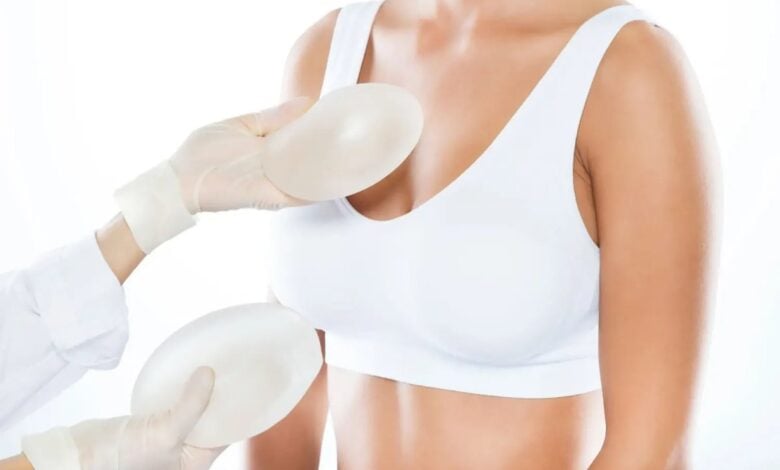
A plastic surgeon assessing a patient’s breasts is judging two separate qualities: where the breasts sit on the chest, and how much volume they hold. A breast lift changes the first. A breast augmentation changes the second. A patient can be bothered by one, the other or both, and the choice of operation follows from which.
The practice of Dr. Leo Lapuerta, a triple board certified plastic surgeon in the Houston area, offers each procedure on its own and the two in combination. The practice draws the line between them in practical terms.
Position: what a lift changes
Breasts drop for reasons the practice lists as aging, pregnancy, breastfeeding, weight changes and genetics. The skin stretches and loses elasticity, and the nipples and areolas can end up lower on the chest than they once were. Heavy implants can add to the drooping.
A lift, or mastopexy, removes the excess skin, repositions the breast tissue and tightens what remains. If the sag is significant, the surgeon may move the nipple and areola higher, and stretched areolas can be made smaller.
The practice is plain about the trade. A breast lift does not change cup size. It moves where the breasts sit, so the same mass sits higher and looks firmer. The candidate it describes wants a more youthful contour without a significant change in size.
Volume: what an implant changes
Augmentation addresses a different complaint: breasts that are smaller than a patient wants, that have lost volume after pregnancy or weight loss, or that differ in size from one side to the other. Most women increase by one or two cup sizes, according to the practice.
Patients choose between saline implants, which the surgeon fills after placement, and silicone implants, which arrive pre-filled and often have a more natural look and feel. Dr. Lapuerta prefers round implants. In his view, teardrop shapes can cause problems for some patients, since a teardrop implant that shifts can distort the breast, and they offer no benefit over a round implant.
An implant on its own does not correct significant sagging. The practice notes that patients with significant sagging may benefit from adding a lift, and whether to add one is a question for the consultation.
Wanting both changes
A combined procedure suits patients who want more volume and a higher position at once. In that operation, according to the practice, implants can go under the chest muscles while the surgeon tightens the surrounding skin and tissue to hold them in place.
Describing what drew him to plastic surgery, Dr. Lapuerta puts the anatomy each patient brings at the center of the work:
“It allows me to work with what I have in a given patient presentation and utilize all aspects of that patient’s anatomy, with its benefits and limitations, along with my skills to create both the desired aesthetic and a functionally beneficial outcome for my patients.”
In practice, that means the plan depends on skin elasticity, the amount of natural breast tissue, chest muscle anatomy, weight and the size the patient wants, factors he weighs when deciding implant placement.
The two procedures, side by side
The practice gives these figures for each procedure performed alone:
- Operating time: a lift takes three to five hours, or longer when combined with other procedures. An augmentation takes about one to two hours.
- Return to work: within a week after a lift. One to two weeks after an augmentation.
- Strenuous activity: around six to eight weeks after a lift, once the doctor releases the patient. Four to six weeks before heavy lifting after an augmentation.
- Settling: a lift shows its full effect over several weeks. Augmented breasts take around six months to fall into their final position.
- Longevity: breast lift results last 10 to 15 years on average, as aging continues to change the breasts. With proper care, the practice says, many implant patients keep their result for 10 to 15 years or more, though implants are not considered lifetime devices.
Both are outpatient procedures under general anesthesia, and both leave scars that the practice says fade with time. For augmentation, Dr. Lapuerta places incisions in the crease under the breast, under the arm or around the nipple. Before either surgery, patients need someone to drive them home and stay with them at first, and augmentation patients quit smoking four to six weeks ahead.
Settling the question
Dr. Lapuerta begins with a physical exam and a review of medical history, then evaluates breast tissue, skin elasticity and goals. A patient who likes her size but not its position is describing a lift. A patient happy with her position who wants more fullness is describing an augmentation. A patient who wants both changes is a candidate for the combined operation, and at the consultation Dr. Lapuerta, who has more than 30 years of experience, discusses implant type and size alongside the amount of lift she can expect once swelling goes down.
This article is for general information only and is not medical advice. Results vary from patient to patient. Consult a board-certified plastic surgeon or your physician about your own situation. Written in partnership with Joseph Lambert, a publicist working with Leo Lapuerta, MD Plastic Surgery.