|
What this covers
|
Water damage drying looks like a matter of pointing fans at wet things, and the equipment lists on most restoration jobs reinforce that impression by being dominated by air movers.
The fans are only half the process, and running them without the other half does not merely fail to dry the building. It can distribute the problem.
Two Machines, Two Halves of One Cycle
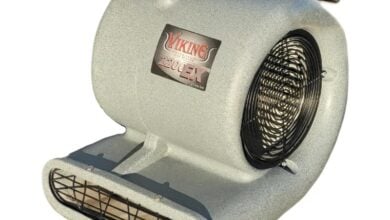
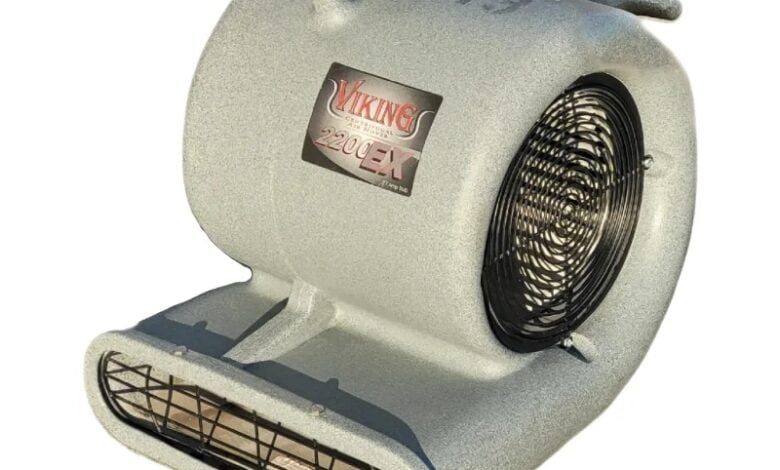
An air mover accelerates evaporation from wet surfaces. It moves high-velocity air across wet material, breaking the saturated boundary layer that sits against the surface and slows natural drying. The water leaves the carpet, the drywall or the subfloor and enters the air.
A dehumidifier removes water vapor from air. It pulls the moisture the air movers released out of the atmosphere and collects it as liquid.
The critical fact sits between those two sentences. Evaporation raises the humidity of the surrounding air. Air movers do not remove water from a building. They relocate it from the material into the air, and if nothing takes it out of the air, it goes back into the building.
It goes into whatever is currently driest, which is frequently material that was never wet in the first place. That is how a drying operation with plenty of fans and insufficient dehumidification produces secondary damage in rooms nobody was worried about.
Why the Ratio Matters More Than the Count
Restoration equipment is normally specified as a count of air movers based on affected area and material. That number is necessary and it is not sufficient, because it says nothing about whether the moisture being liberated can be removed.
The balance is the actual constraint.
|
Situation |
What happens |
Result |
|
Air movers only |
Water evaporates, humidity climbs |
Moisture migrates to dry materials |
|
Dehumidification only |
Air dries, surfaces release slowly |
Very slow, deep material stays wet |
|
Both, balanced |
Evaporation matched by removal |
Steady, controlled drying |
|
Both, under-dehumidified |
Evaporation outpaces removal |
Humidity climbs, drying stalls |
The fourth row is the common failure and the hardest to spot, because the equipment is running and the site looks like a drying operation. Moisture readings that plateau after an initial fall are the signal, and the response is more dehumidification rather than more fans.
Household Dehumidifiers Are Not Small Commercial Ones
The difference is not primarily capacity, though capacity differs substantially. It is the humidity range each is designed to operate in.
A refrigerant dehumidifier condenses moisture on a cold coil. Air passes over a coil below its dew point, water condenses, and drier air leaves. A consumer unit is designed for a humid basement: it works well at high relative humidity and its performance falls away as the air dries, because there is less moisture available to condense and the coil approaches freezing.
A low grain refrigerant dehumidifier operates at lower humidity levels. It is engineered to keep pulling water out of air that a consumer unit has effectively given up on, which is precisely the condition in the later stages of a drying job.
That matters because drying is not finished when the air feels comfortable. It is finished when the materials reach a target moisture content, and the last part of that process happens in air that is already fairly dry. A consumer unit stalls exactly where the job needs the most capability.
Desiccant units take a different approach again, using a moisture-absorbing medium rather than a cold coil, and they hold performance at lower humidity and lower temperature than refrigerant machines. They are the answer for cold conditions and for material that has to be driven very dry.
Placement Is Geometry, Not Coverage
Air movers are frequently placed as though the goal were to fill the room with moving air. The goal is to move air across wet surfaces, which is a different objective and produces different positions.
The principles are unglamorous.
-
Shallow angle to the surface. Air directed straight at a wall stops dead. Air directed at a shallow angle sweeps along it and keeps moving.
-
All units the same direction. A room set up so that the airflow travels a circuit dries faster than one where units oppose each other and cancel out.
-
Against the wet material, not into the room. The wet surface is the target, not the air volume.
-
Into cavities where the water is. Wall cavities, under cabinets, beneath flooring. Surface drying with a wet cavity behind it is a job that will need doing twice.
The last point is the one that separates a professional setup from an improvised one, because it requires knowing where the water actually went rather than where it is visible.
Equipment selected for a specific loss rather than by generic count is what makes that possible, and restoration equipment rental in Los Angeles is specified that way, with the service area and hours covering the wider metro.
The Los Angeles Variable
Los Angeles has a Mediterranean climate, which is generally an advantage for drying. Low ambient humidity through much of the year means outside air is often drier than inside air, and the moisture load the equipment has to handle is lower than in a humid region.
The marine layer raises coastal humidity, and this is where the local nuance sits. Coastal and near-coastal areas experience persistent morning cloud and elevated humidity, particularly in late spring and early summer, that inland areas do not. Two jobs in the same county can present quite different drying conditions.
Two practical consequences.
Ventilating with outside air is a legitimate technique when outside air is genuinely drier, and it is a mistake when the marine layer is in. The decision has to be made from a reading rather than from the general reputation of the climate.
And equipment specification should reflect the location within the metro. A job near the coast in marine layer season carries a higher moisture load than the same job inland, and a specification copied from an inland job will be short.
What Gets Measured
Drying is verified rather than assumed, and three readings matter.
|
Reading |
What it tells you |
Why it matters |
|
Material moisture content |
Whether the material is dry |
The actual completion criterion |
|
Relative humidity |
How much moisture the air holds |
Whether removal is keeping up |
|
Temperature |
Evaporation rate and equipment performance |
Warmer air holds and moves more moisture |
Daily readings from fixed points produce a curve. A curve that falls and then flattens well above target means the removal side is under-resourced. A curve that never falls means the water source has not been found or the affected material has not all been identified.
Equipment running without readings is equipment running on hope, and it is the reason some jobs run far longer than they needed to while others are called complete with wet cavities behind dry-looking walls.
Matching Equipment to the Loss
Not every job needs the same mix, and the material involved changes the answer more than the square footage does.
|
Loss type |
Air movers |
Dehumidification |
Note |
|
Carpet and pad, clean water |
Standard count |
Standard |
Pad often removed rather than dried |
|
Hardwood flooring |
Higher, directed |
Higher capacity |
Slow release, needs sustained low humidity |
|
Concrete slab |
Moderate |
High, sustained |
Releases moisture for a long period |
|
Wall cavities |
Directed into cavities |
Standard to high |
Surface drying alone leaves the cavity wet |
|
Crawl space |
Moderate |
Desiccant often better |
Cool conditions suit desiccant |
|
Cabinetry and millwork |
Low velocity, directed |
High |
Fast surface drying risks damage |
The last row carries a warning that applies broadly. Aggressive air movement on finished materials can cause cupping, delamination or cosmetic damage, so the fastest possible drying is not always the correct drying.
Dense materials in the middle of the table are the ones that fail quietly. Concrete and hardwood release moisture slowly, so equipment removed when surfaces read dry leaves a reservoir that resurfaces later.
What the Standard Advice Misses
Consumer guidance on water damage concentrates on speed, and speed matters. It rarely explains the mechanism, which is why the fans-only approach persists: it looks like drying and it feels productive.
The second omission is the distinction between equipment classes. Advice to run a dehumidifier does not distinguish a consumer unit from a low grain refrigerant one, and the difference determines whether the job finishes.
The third is verification. Guidance ends when things look and feel dry, which is well before the material reaches target moisture content. The material that stays wet is inside walls and under floors, and it is the material that produces the problem that surfaces weeks later.
The Summary
Air movers move water out of materials and into the air. Dehumidifiers take it out of the air. Running the first without enough of the second relocates moisture into dry parts of the building rather than removing it.
The balance between them is the real specification, and drying that stalls after an initial improvement is almost always short on removal rather than short on fans.
Consumer dehumidifiers lose capability precisely where a drying job needs it most, in the final stage when the air is already fairly dry.
And in Los Angeles the marine layer is the variable that makes two jobs in one county behave differently, which is a reason to specify from a reading rather than from the climate’s general reputation.