Mexican Green Card Holders Can Pursue U.S. Citizenship Through the Naturalization Process

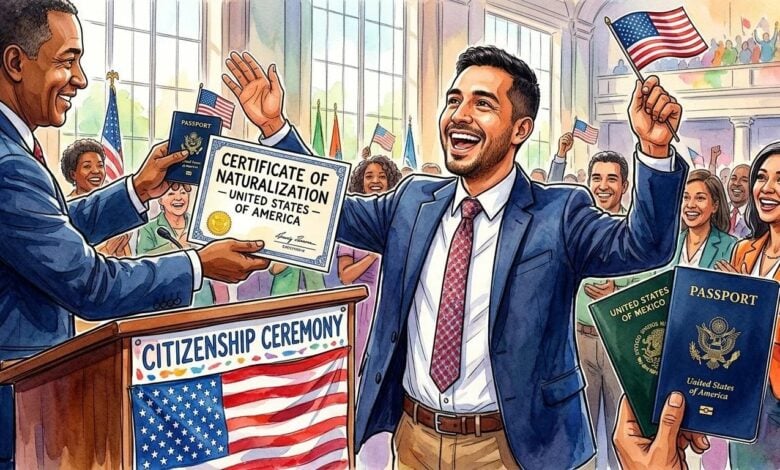
Mexican permanent residents of the United States may become eligible for American citizenship after meeting federal residence, physical presence, language, civics, and good moral character requirements, while qualifying applicants generally retain their Mexican nationality under Mexico’s constitutional protections.
WASHINGTON, DC, November 26, 2026 — Mexican citizens holding United States green cards may qualify for American citizenship through naturalization after satisfying federal immigration requirements, creating opportunities for permanent residence security, international mobility, employment, and participation in American civic life.
Although lawful permanent residence allows qualifying Mexican nationals to live and work indefinitely in the United States, becoming an American citizen requires a separate application process involving residence history, physical presence, English-language proficiency, civics knowledge, and good moral character.
For Mexican families established in California, Texas, Arizona, Florida, and other states, naturalization can provide additional legal rights while generally preserving Mexican nationality acquired by birth, allowing qualifying individuals to maintain citizenship connections with both countries.
However, possessing a green card for the required number of years does not automatically establish citizenship, because federal authorities must examine eligibility, conduct background checks and approve the application before the applicant completes the oath of allegiance.
Five Years of Permanent Residence Establishes the Standard Pathway
Most Mexican lawful permanent residents seeking American citizenship apply under the general five-year naturalization provision, which requires continuous residence in the United States and satisfaction of additional statutory conditions before citizenship can be granted.
Applicants generally must be at least 18 years old when submitting Form N-400, demonstrate qualifying residence and physical presence, establish good moral character and complete the required English and civics assessments unless an exemption applies.
The five-year period ordinarily begins when the individual becomes a lawful permanent resident, although particular immigration histories and circumstances can require additional examination before determining the earliest permissible naturalization application date.
A Mexican resident who received permanent residence in 2022 may therefore approach eligibility in 2027, provided the person has maintained the necessary residence and meets every remaining legal requirement.
Physical Presence Requires at Least 30 Months
Under the standard five-year pathway, applicants generally must demonstrate at least 30 months of actual physical presence within the United States during the five years immediately preceding submission of their naturalization application.
This requirement differs from continuous residence because it measures the time physically spent within American territory, making travel dates and historical absences important even when the applicant maintained a valid green card throughout the period.
Mexican nationals who frequently travel between the United States and Mexico should keep accurate departure and return records, especially when employment, family responsibilities, or property management require extended international travel.
The relevant physical presence requirement must also be distinguished from the rules governing abandonment of permanent residence, since compliance with one immigration standard does not automatically satisfy every naturalization requirement.
Continuous Residence Is a Separate Legal Requirement
United States naturalization legislation generally requires applicants to maintain continuous residence during the applicable statutory period, meaning the person’s ordinary residence must remain consistent with the requirements governing lawful permanent residents.
An absence exceeding six months but lasting less than one year can create a rebuttable presumption that continuous residence was interrupted, requiring appropriate evidence demonstrating that the applicant maintained qualifying American residence.
An absence of one year or longer generally breaks continuous residence for ordinary naturalization purposes, subject to limited statutory exceptions that must be established under the applicable immigration provisions.
Consequently, Mexican green card holders maintaining homes or businesses in Mexico should seek qualified advice before taking lengthy departures that could delay naturalization or raise separate questions about permanent resident status.
Marriage to an American Citizen Can Shorten the Timeline
Certain Mexican permanent residents married to United States citizens may qualify for naturalization after three years rather than five, provided they satisfy statutory conditions involving the marriage, residence and continued marital relationship.
The applicant generally must have lived in marital union with the American citizen spouse throughout the required period, while the spouse must ordinarily have possessed American citizenship for the applicable three years.
This pathway also requires at least 18 months of qualifying physical presence during the three-year period, along with the other naturalization standards governing good moral character and immigration compliance.
Marriage itself does not automatically confer U.S. citizenship, so Mexican spouses must distinguish eligibility for permanent residence from the later requirements for naturalization.
Applications Can Sometimes Be Submitted 90 Days Early
Federal immigration procedures generally permit qualifying applicants to file Form N-400 as early as 90 calendar days before completing the required continuous residence period under the ordinary five-year or qualifying three-year pathway.
However, early filing does not eliminate physical presence, good moral character or other requirements, and applicants must ensure that they satisfy the relevant conditions when the law requires them to be met.
Calculate the earliest filing date carefully using the official immigration record, because submitting an application prematurely can create unnecessary administrative complications and potential financial losses.
Applicants should also distinguish permission to submit a naturalization application from eligibility to complete the process, since citizenship cannot be granted until all statutory requirements are met.
Three Months of State Residence May Be Required
Most naturalization applicants must establish at least three months of residence within the state or immigration service district where they submit their application, creating another requirement that can affect recent movers.
A Mexican green card holder relocating from California to Texas shortly before applying should therefore confirm whether they have met the state residence requirement before submitting Form N-400.
This condition operates separately from the general five-year continuous residence requirement, so keep addresses accurate and report residential changes through the required immigration procedures.
Failure to coordinate a recent move with the appropriate filing requirements can create administrative complications, particularly when an applicant’s residence documentation or government records contain inconsistent information.
The 2025 Civics Test Changed Naturalization Preparation
The United States introduced a revised naturalization civics examination for applicants filing Form N-400 on or after October 20, 2025, increasing the number of potential questions and the knowledge required to pass.
Under the 2025 test, officers generally ask up to 20 questions from a published bank of 128 civics questions, and applicants ordinarily must answer at least 12 correctly to pass.
Applicants who filed before October 20, 2025, generally remain subject to the earlier 2008 version, which ordinarily involves answering six of ten questions correctly from a bank of 100.
Mexican residents preparing for citizenship in November 2026 should use study materials that match their filing date, not older resources that describe the previous exam.
English Proficiency Remains a Central Requirement
Most applicants must demonstrate an ability to read, write, speak, and understand basic English, with speaking ability generally assessed during the naturalization interview and reading and writing evaluated through separate examination components.
The required standard is basic functional English rather than advanced academic proficiency, although applicants should prepare enough to understand questions about their immigration history and respond accurately during their interviews.
Mexican applicants who have lived in predominantly Spanish-speaking communities may benefit from organized language preparation, especially when their employment has not required frequent communication in English.
The federal government recognizes specific age-related and disability-related exceptions, so an individualized eligibility review matters before assuming every permanent resident must complete identical testing.
Older Permanent Residents May Qualify for English Exceptions
Applicants who are at least 50 years old and have maintained lawful permanent residence for at least 20 years may qualify for an English-language exemption under the commonly recognized 50/20 provision.
A separate 55/15 exception applies to qualifying individuals who are at least 55 years old and have held permanent residence for at least 15 years when applying.
These exceptions generally do not eliminate the civics requirement, although qualifying applicants may complete the examination in their preferred language with appropriate interpretation arrangements under the applicable rules.
Individuals aged at least 65 with 20 years of qualifying permanent residence may receive additional civics-test consideration, including a specially designated selection of examination questions.
Good Moral Character Requires Careful Review
American naturalization law requires applicants to demonstrate good moral character during the relevant statutory period, and certain earlier conduct may still matter under the applicable federal provisions.
Criminal convictions, immigration violations, false statements, and other legally relevant circumstances can affect eligibility, making a complete review important before an individual submits an application that includes detailed personal-history questions.
Some offenses create temporary obstacles, while others can establish more serious statutory bars, meaning the legal consequences depend upon the particular conduct, disposition and governing immigration provisions.
Mexican permanent residents with prior legal proceedings should seek qualified immigration advice before applying, especially because an adverse finding can affect naturalization and may raise separate questions about existing immigration status.
Unlawful Voting and Citizenship Claims Create Serious Risks
Permanent residents generally cannot vote in federal elections, and making a false claim to United States citizenship can have serious immigration consequences even when the individual has otherwise lived lawfully in America for many years.
An October 2026 Associated Press investigation into naturalization applicants accused of unlawful voting described criminal allegations that arose during citizenship reviews while noting the broader debate over enforcement and the rarity of documented noncitizen voting.
The reporting underscores the importance of understanding voter registration questions and other official declarations, particularly when applicants may have received confusing information during driver’s license renewals or interactions with government agencies.
Applicants should provide accurate explanations of any relevant incidents and seek legal advice when needed, recognizing that an allegation is not a conviction and each case requires individual assessment.
Form N-400 Begins the Formal Application
Eligible Mexican permanent residents ordinarily apply using Form N-400, which requests information concerning personal identity, residence, international travel, employment, family relationships, and matters relevant to eligibility for United States citizenship.
The application must be completed accurately and supported by the documentation appropriate to the applicant’s circumstances, including records concerning marriages, international absences or previous immigration and legal proceedings.
The official U.S. government naturalization guide explains eligibility categories, the application process and the citizenship examination, providing an authoritative starting point for applicants reviewing current requirements.
Government filing fees, accepted payment procedures and processing arrangements should be verified before submission, because these administrative requirements can change independently of the underlying statutory eligibility rules.
Biometrics and Background Checks Remain Important
United States Citizenship and Immigration Services may require biometrics or reuse existing biometric information when reviewing a naturalization application, allowing identity verification and security checks through authorized government procedures.
Applicants should respond promptly to official notices and attend scheduled appointments where required, because missing an appointment or failing to provide requested evidence can delay processing or jeopardize an application.
Background screening does not mean that approval is guaranteed once a biometric appointment has been completed, since officers must still determine whether all residence, character and examination requirements have been satisfied.
The process should therefore be treated as an independent citizenship review rather than a routine administrative exchange in which a green card automatically becomes an American passport.
The Naturalization Interview Examines Eligibility
During the naturalization interview, an immigration officer may review the applicant’s Form N-400 responses, examine supporting documents, and ask questions concerning residence, international travel, criminal history, and other relevant eligibility matters.
The interview generally also includes English and civics testing unless the applicant qualifies for appropriate exemptions, so familiarity with the application and accurate personal records are important for successful preparation.
Applicants should answer questions truthfully and clarify misunderstandings rather than speculate about dates or conceal information that may be material to the government’s nationality determination.
Where additional documentation is required, the government may issue a request or continue examination rather than immediately approving citizenship, illustrating why interview attendance does not automatically complete the naturalization process.
The Oath of Allegiance Completes Naturalization
An approved applicant generally becomes a United States citizen only after completing the required oath of allegiance, unless a legally applicable exception or alternative procedure applies to the circumstances.
The naturalization ceremony marks an important legal transition because the individual receives evidence of citizenship and may subsequently apply for a United States passport through the appropriate government procedures.
Mexican applicants should distinguish application approval from becoming citizens, since outstanding oath requirements can affect when nationality rights formally begin.
Once naturalized, the individual generally acquires rights associated with American citizenship, including eligibility to vote in federal elections and permanent protection against ordinary immigration-based removal.
Mexican Citizenship by Birth Can Generally Be Retained
Mexico’s Constitution protects nationality acquired by birth against deprivation, generally allowing Mexicans who become naturalized American citizens to retain their original Mexican nationality without automatically surrendering their connection to Mexico.
This protection can provide meaningful opportunities for individuals maintaining family, property or business relationships in both countries, although dual citizens must continue observing the laws and travel requirements imposed by each government.
Mexicans who originally acquired their nationality through naturalization face different constitutional provisions, making their circumstances distinct from individuals who possessed Mexican citizenship from birth.
For qualifying Mexican-born applicants, lawful American naturalization can create dual nationality while preserving substantial rights in both countries, subject to applicable legal obligations.
American Citizenship Changes Travel and Tax Responsibilities
Naturalized American citizens generally must use valid United States passports for international travel involving entry into or departure from the country, subject to specifically authorized exceptions under federal law.
American citizens also generally remain subject to federal income tax reporting on worldwide income, including when they subsequently establish permanent residence outside the United States.
Foreign tax credits, exclusions and applicable treaty provisions can affect the resulting financial obligations, making coordinated tax planning important for Mexican-American dual citizens maintaining income or investments across national borders.
Citizenship can therefore provide additional residence security and mobility while creating responsibilities that differ from those applicable to lawful permanent residents.
Amicus International Consulting and Dual-Citizenship Planning
For Mexican permanent residents considering American citizenship, international mobility planning should distinguish the naturalization pathway from investment citizenship, citizenship by ancestry and other programs involving entirely different nationality requirements.
Amicus International Consulting discusses these broader issues through its second-citizenship and international mobility advisory services, providing information about additional nationality strategies while official naturalization decisions remain with United States government authorities.
Applicants should independently verify eligibility, examine their immigration histories and obtain qualified advice when international residence, criminal records or prior nationality circumstances create legal complications.
A responsible strategy emphasizes truthful documentation and compliance with federal requirements rather than assuming that permanent resident status alone guarantees citizenship approval.
Conclusion: Green Card Holders Have a Defined Citizenship Pathway
Mexican lawful permanent residents can pursue American citizenship through a structured naturalization process that generally requires five years of continuous residence, at least 30 months of physical presence and successful completion of other statutory conditions.
Certain applicants married to American citizens may qualify through a three-year pathway, while qualifying older residents and individuals with recognized disabilities may receive exemptions or accommodations concerning particular examination requirements.
The revised civics examination, background screening and continuing eligibility review make careful preparation especially important in 2026, particularly for applicants whose international travel or personal histories require additional documentation.
For Mexican citizens by birth, successful American naturalization can provide substantial rights while generally preserving Mexican nationality, allowing qualifying individuals to maintain enduring connections with both countries.
Ultimately, obtaining an American passport requires more than possessing a green card for the prescribed period, making lawful residence, accurate records, good moral character, and official government approval essential to becoming a United States citizen.